
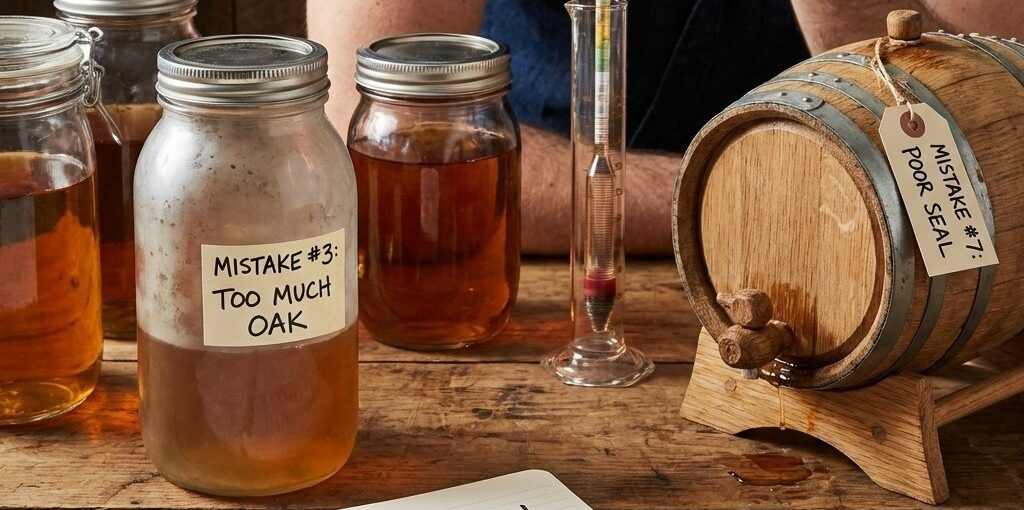
If you’re thinking about aging whiskey at home, it’s easy to make mistakes that can spoil your efforts. From choosing the wrong base spirit to mishandling barrels and ignoring storage conditions, these missteps often go unnoticed until it’s too late. Understanding where things commonly go wrong can save you time and frustration—and help you craft a smoother, more balanced whiskey. But what are these pitfalls, exactly?
Choose Quality Whiskey for Home Aging
One crucial step when aging whiskey at home is choosing a quality base spirit. You want a whiskey that already tastes good on its own because aging can only enhance, not fix, poor quality.
Avoid overly harsh or cheap whiskeys—they often lack the complexity needed for aging and may develop unpleasant flavors. Instead, pick a spirit with balanced notes and enough character to mature gracefully.
Also, consider the proof; higher proof whiskeys tend to age better, as they can absorb more flavor from the wood.
Select the Right Barrel Type
Selecting the right barrel type plays a vital role in shaping your whiskey’s flavor during aging. You’ll want to choose barrels made from high-quality oak, as they impart desirable flavors like vanilla, caramel, and spice.
American white oak is popular for its sweet, mellow character, while European oak offers more robust, tannic notes. Pay attention to the barrel’s size, too—a smaller barrel increases the surface area contact, speeding up aging but risking over-oaking.
Also, decide if you want a new charred barrel or a previously used one; new barrels add intense flavors, whereas used barrels provide subtler influences. Avoid cheap or untreated barrels, as they can introduce off-flavors.
Prepare and Maintain Your Barrel Properly
Choosing the right barrel is just the start; how you prepare and maintain it can make or break your whiskey’s aging process.
First, soak your new barrel with water to swell the wood and seal any leaks before adding whiskey. If you’re using a previously used barrel, sanitize it properly to prevent unwanted bacteria or mold.
Keep a close eye on the barrel for signs of leakage or drying out—these can spoil your whiskey. Regularly topping off the barrel minimizes evaporation loss and reduces oxidation.
Store the barrel upright to ensure even liquid contact with the wood. Proper preparation and maintenance help extract the best flavors and protect your whiskey, so don’t rush this crucial step in your aging journey.
Control Storage Environment and Temperature
Every aspect of your whiskey’s aging depends heavily on controlling the storage environment and temperature. If the temperature swings wildly, your whiskey won’t mature evenly, causing unwanted flavors or stalling the aging process.
Aim to keep your barrel in a cool, dark place with consistent temperatures, ideally between 55°F and 65°F. Avoid direct sunlight and damp areas, as they can damage the barrel and alter the whiskey’s character.
Humidity also plays a role—too dry, and you risk excessive evaporation; too humid, and mold might develop. Use a thermometer and hygrometer to monitor conditions regularly.
Monitor Your Whiskey Aging Progress Regularly
While patience is key in aging whiskey, you still need to monitor its progress regularly to ensure it’s developing the flavors you want.
Check your whiskey every few weeks by opening the barrel or bottle and tasting small samples. This helps you detect any off-flavors early and track how the character evolves.
Take notes on aroma, taste, and mouthfeel so you can compare changes over time. Regular monitoring also lets you decide if adjustments are needed, like changing storage conditions or deciding when it’s ready to bottle.
Age Your Whiskey for the Optimal Time
Keeping a close eye on your whiskey’s development helps you determine the perfect aging time. Don’t just let it sit indefinitely; aging too long can overpower the spirit with wood flavors, while too short leaves it rough and unbalanced.
Taste your whiskey regularly to catch that sweet spot where the flavors meld smoothly and complexity peaks. Remember, aging isn’t about simply waiting—it’s about knowing when the whiskey has reached its optimal character.
Factors like barrel type, storage conditions, and initial spirit quality influence timing, so trust your palate over arbitrary timelines. If you wait too long, the whiskey might become harsh or overly tannic.
Use the Appropriate Barrel Size for Home Aging
Because barrel size directly affects how your whiskey interacts with the wood, choosing the right size is crucial for home aging.
Smaller barrels have a higher surface area-to-volume ratio, which means your whiskey will extract flavors from the wood faster. This can speed up aging but also risks over-oaking if you’re not careful.
Larger barrels slow the process, allowing for more subtle, balanced flavor development over time. For home aging, barrels between 1 to 10 gallons strike a good balance, letting you control the flavor without waiting years.
Avoid using barrels that are too small—they can overpower your whiskey quickly. Pick a size that matches your patience and flavor goals, and always monitor the aging closely to prevent unwanted bitterness or harsh notes.
Rack and Filter Your Whiskey Before Bottling
Anyone preparing to bottle their home-aged whiskey should rack and filter it to ensure clarity and smoothness.
Racking means transferring the whiskey off the sediment or lees that settle during aging. Leaving these particles can cause off-flavors and cloudiness. Use a siphon or racking cane to gently move the liquid into a clean container, avoiding disturbing the sediment.
After racking, filtering the whiskey removes fine particles and any remaining impurities. You can use a fine mesh strainer or coffee filter, depending on how clear you want the final product. This step enhances the whiskey’s appearance and taste, giving it a polished finish.
Skipping racking and filtering is a common mistake that can ruin your hard work by leaving your whiskey hazy or gritty.
Sanitize All Equipment Thoroughly
Although it might seem tedious, sanitizing all your equipment thoroughly is essential to prevent unwanted bacteria or yeast from spoiling your whiskey.
Every container, funnel, and stirring tool you use should be cleaned and sanitized before contact with your spirit. Even small residues can introduce contaminants that affect flavor and clarity.
Use a suitable sanitizer designed for brewing or distilling, following the instructions carefully to ensure effectiveness. Rinse equipment well if required, and allow it to dry completely to avoid dilution.
Skipping this step risks off-flavors, cloudiness, or even complete spoilage, wasting your effort and ingredients.
Make sanitization a non-negotiable part of your process to keep your whiskey pure and improve your chances of aging a smooth, enjoyable final product.
Use Only Safe, Food-Grade Materials
Sanitizing your equipment protects your whiskey from unwanted contaminants, but using safe, food-grade materials keeps it free from harmful chemicals and off-flavors.
When aging whiskey at home, always choose barrels, containers, and tools made specifically for food use. Avoid plastics or metals that aren’t certified food-safe, as they can leach toxins or impart unpleasant tastes.
Even some wood types can release harmful compounds if not properly treated. Stick to charred oak barrels or certified wood chips designed for aging spirits.
Using non-food-grade materials risks ruining your batch and could pose health hazards. By selecting only safe materials, you preserve the purity and flavor of your whiskey, ensuring a smooth, enjoyable final product every time.
Conclusion
Aging whiskey at home can be a fun and rewarding process, but avoiding common mistakes is key. Make sure you pick a quality base spirit, prepare and maintain your barrel properly, and control your storage environment. Don’t forget to rack and filter your whiskey before bottling, and always sanitize your equipment using safe, food-grade materials. By paying attention to these details, you’ll improve your chances of creating a smooth, flavorful whiskey you’ll be proud to enjoy.