
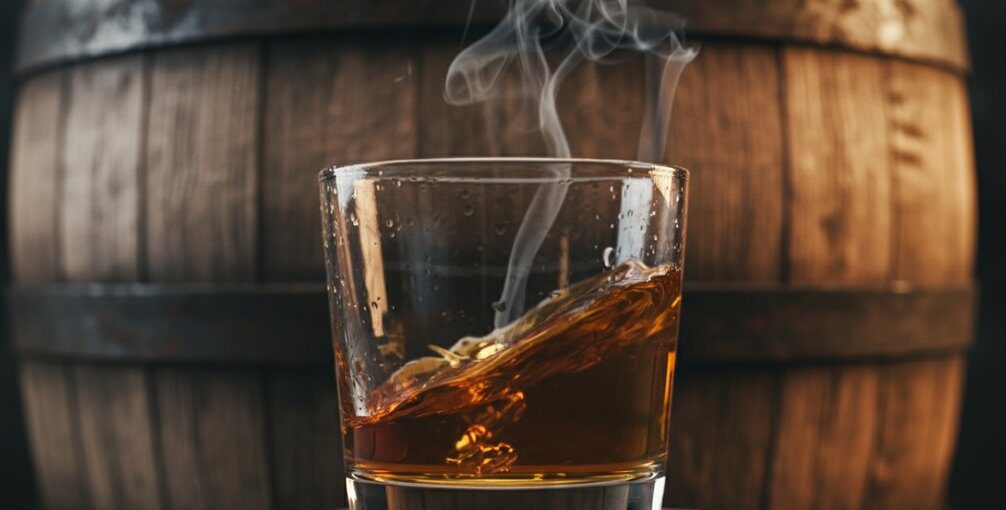
When you think about whiskey aging, oxygen might not be the first element that comes to mind. Yet, the way oxygen interacts with the spirit inside barrels plays a subtle but vital role in shaping its flavor and aroma. It’s not just about letting time pass; it’s about how oxygen triggers complex chemical changes that can make or break the final character. But how exactly does this invisible element influence your favorite whiskey?
Key Takeaways
- Oxygen slowly enters whiskey barrels through wood grain and stave joints, enabling controlled maturation without spoilage.
- Oxygen exposure drives chemical reactions like oxidation and esterification, enhancing whiskey’s flavor, aroma, and smoothness.
- Barrel type and wood tightness regulate oxygen permeability, influencing the maturation pace and flavor complexity.
- Oxygen reacts with ethanol and phenolics, transforming harsh notes into mellow, complex flavors over time.
- Modern technologies like sensors and micro-oxygenation precisely manage oxygen levels for consistent aging outcomes.
Oxygen Entry Into Whiskey Barrels
Although you mightn’t notice it, oxygen plays a crucial role in whiskey maturation by entering the barrels through tiny gaps in the wood.
When you look closely at a wooden barrel, you’ll see it’s not completely airtight. The wood’s natural grain and the small spaces where the staves meet allow oxygen to seep inside slowly.
As you age whiskey, oxygen gently interacts with the spirit, influencing its flavor development. You might think barrels are sealed tight, but these micro-openings let just enough air in to support subtle chemical reactions.
This controlled oxygen entry is essential because it keeps the whiskey evolving over time without letting it spoil. Understanding this helps you appreciate the craftsmanship behind every bottle.
Why Oxygen Matters in Whiskey Aging
The slow entry of oxygen into whiskey barrels sets the stage for important chemical changes during aging.
You might wonder why oxygen matters so much in this process. It’s because oxygen interacts subtly with the whiskey, influencing its flavor and aroma development. Without oxygen, the whiskey would mature very differently, lacking the complexity you value.
Oxygen exposure helps mellow harsh notes and enhances the smoothness you enjoy. It also aids in extracting compounds from the wood, contributing to the whiskey’s character.
While too much oxygen can spoil the spirit, the right amount ensures balance and depth. Understanding oxygen’s role helps you appreciate why aging isn’t just about time, but about controlled exposure that shapes the final product’s quality.
Oxygen-Driven Chemical Reactions in Whiskey
When oxygen interacts with whiskey during maturation, it triggers a series of chemical reactions that transform the spirit’s flavor profile.
You’ll find that oxygen promotes oxidation, where ethanol converts into aldehydes and acids, creating new aromatic compounds. It also encourages esterification, combining acids and alcohols to form esters, which add fruity and floral notes.
Additionally, oxygen reacts with phenolic compounds, softening harsh tannins and contributing to a smoother mouthfeel.
These reactions don’t happen all at once—they progress gradually, influenced by oxygen levels, temperature, and barrel wood.
By understanding these oxygen-driven chemical changes, you can appreciate how controlled exposure shapes whiskey’s complexity.
This foundational knowledge sets the stage for exploring how these chemical shifts specifically alter the flavors you detect in aged whiskey.
How Oxygen Changes Whiskey Flavors During Aging
As oxygen gradually interacts with whiskey during aging, you start to notice distinct shifts in its flavor profile.
Oxygen triggers oxidation, softening harsh alcohol notes and revealing sweeter, fruitier hints like apple or honey. It also promotes esterification, where acids and alcohols combine to form esters, adding complexity with floral or fruity aromas.
You’ll find that prolonged oxygen exposure mellows bitterness, balancing the taste and enhancing smoothness. At the same time, subtle nutty and caramel tones develop, enriching the overall character.
However, too much oxygen can lead to overly woody or stale flavors, so the amount and timing of exposure are crucial.
Understanding how oxygen shapes these changes helps you appreciate the nuanced transformation whiskey undergoes during maturation.
How Barrel Types Affect Oxygen Contact
Oxygen’s role in shaping whiskey flavors doesn’t happen in isolation—it’s heavily influenced by the type of barrel used during aging. When you choose a barrel, you’re not just picking wood; you’re selecting how much oxygen will interact with your spirit.
Oxygen’s impact on whiskey flavors depends greatly on the barrel you select for aging.
New oak barrels, for example, are denser and allow less oxygen to seep in, leading to slower oxidation and a more controlled flavor development. In contrast, used barrels have softened wood fibers, letting more oxygen in and speeding up maturation.
The barrel’s size also matters: smaller barrels expose more whiskey surface area to oxygen, intensifying the interaction. Additionally, the wood’s grain tightness influences oxygen permeability.
Understanding these barrel characteristics helps you predict how oxygen will shape your whiskey’s complexity over time.
Distiller Techniques for Controlling Oxygen
Distillers carefully manage oxygen exposure to shape the whiskey’s flavor and aroma throughout maturation. You can control oxygen levels by selecting specific barrel char types, adjusting warehouse conditions, and choosing barrel placement.
For example, barrels stored in warmer spots experience more oxygen interaction, accelerating flavor development. You might also use humidity controls to influence the wood’s permeability, affecting oxygen transfer rates.
Some distillers experiment with barrel coatings or liners to limit oxygen contact, while others employ micro-oxygenation techniques, adding precise oxygen amounts to mimic natural aging.
How Oxygen Influences Whiskey Aging Speed
Managing oxygen exposure doesn’t just shape flavor; it also affects how quickly your whiskey matures. When oxygen interacts with the spirit inside the barrel, it accelerates chemical reactions like oxidation and esterification.
These reactions break down harsh compounds and develop smoother, more complex flavors faster. However, too much oxygen can lead to over-aging, causing undesirable notes or excessive evaporation known as the “angel’s share.”
Conversely, limited oxygen slows these processes, extending maturation time but potentially resulting in a less developed profile. By carefully controlling oxygen levels—through barrel choice, storage conditions, and racking—you influence how fast your whiskey reaches its ideal character.
Understanding this balance helps you predict and guide aging speed, ensuring your whiskey matures just right without compromising quality or flavor depth.
Latest Innovations in Oxygen Management for Whiskey
As whiskey makers seek greater control over flavor development, they’ve turned to cutting-edge technologies to fine-tune oxygen exposure during aging.
You can now use advanced sensors embedded in barrels to monitor oxygen levels in real time, ensuring your whiskey matures exactly as intended. Some distilleries employ micro-oxygenation systems, which introduce precise oxygen doses to accelerate aging without risking over-oxidation.
Additionally, innovative barrel coatings and modified staves help regulate oxygen permeability, giving you more consistency batch after batch. These tools let you experiment confidently, balancing oxidation to enhance complexity and smoothness.