You might not realize it, but the size of the barrel plays a huge role in the quality of your favorite spirits. Large distilleries mostly stick to 200-liter barrels because they hit the sweet spot between flavor development and efficient production. This choice impacts everything from taste to price, and understanding why can change how you appreciate what’s in your glass. There’s more to this standard than meets the eye.
Key Takeaways
- 200L barrels offer an optimal balance of size and wood-liquid contact for efficient, consistent maturation and rich flavor development.
- Their standardized size maximizes warehouse space and simplifies logistics, reducing production costs and ensuring scalable, repeatable quality.
- The surface area-to-volume ratio in 200L barrels accelerates aging, enhancing flavor complexity like vanilla, caramel, and subtle spices.
- Larger or smaller barrels disrupt flavor consistency and increase costs, complicating quality control and blending processes.
- Using 200L barrels enables distilleries to maintain predictable aging, ensuring balanced spirits aligned with consumer preferences.
Why 200L Barrels Are the Standard in Large Distilleries
One key reason large distilleries rely on 200L barrels is their perfect balance between size and manageability. You’ll find these barrels are big enough to mature spirits efficiently, allowing optimal contact between the liquid and the wood.
At the same time, they’re manageable enough for workers to handle during filling, transferring, and aging processes without specialized equipment. This size also supports consistent aging results, which is crucial when producing spirits at scale.
Easily handled by workers without special tools, this size ensures consistent aging for large-scale spirit production.
When you use 200L barrels, you’re tapping into an industry standard that ensures quality and repeatability. Plus, these barrels fit well in storage, maximizing space without sacrificing accessibility.
In short, 200L barrels offer you an ideal combination of practicality and performance that large distilleries trust every day.
Why Larger or Smaller Barrels Don’t Work at Scale
Although larger barrels can hold more spirit, they slow down the aging process and make it harder to achieve consistent flavor profiles. When you scale up barrel size, the surface area-to-volume ratio decreases, limiting how much wood interacts with the liquid. This uneven maturation complicates blending, which large distilleries rely on for consistency.
On the flip side, smaller barrels speed up aging but create challenges too. They require more barrels to match volume, increasing storage needs, labor, and costs. Plus, managing thousands of tiny barrels makes tracking and quality control a headache.
Using barrels significantly bigger or smaller than 200L disrupts the balance between efficiency, flavor development, and operational practicality. So, for large-scale distilling, you’ll find that 200L barrels hit the sweet spot that neither giant nor tiny barrels can match.
How 200L Barrel Size Affects Spirit Aging and Flavor
Because 200L barrels strike an ideal balance between wood contact and liquid volume, they play a crucial role in developing your spirit’s flavor and character.
When you age your spirit in these barrels, the liquid interacts with the wood at just the right intensity—enough to extract rich flavors, but not so much that it overwhelms. This size also allows for consistent oxygen exchange, which helps mellow harsh notes and enhance complexity over time.
You’ll find that aging in 200L barrels encourages a harmonious development of vanilla, caramel, and spice notes, creating a smooth, well-rounded profile.
Plus, the manageable volume helps distilleries maintain quality control, so your spirit consistently matures to its full potential without losing its unique character.
How Distillers Control Wood and Toast to Shape Flavor
Distillers carefully select the type of wood and the degree of toast to craft distinct flavors in your spirit. Oak is the preferred wood, prized for its porous structure and natural compounds like lignins and tannins that influence taste.
By adjusting the toast level—from light to heavy—they unlock different flavor profiles. A light toast brings out vanilla and caramel notes, while a heavy toast adds smoky, spicy, or charred elements.
You’ll find that the toasting process breaks down wood sugars and releases aromatic oils, directly shaping the spirit’s character.
Distillers also consider the wood’s origin and grain tightness, as tighter grains slow extraction, creating subtler flavors.
Every choice in wood and toast ensures your spirit develops complexity and balance during aging.
Why 200L Barrels Boost Efficiency in Production
The careful choices of wood type and toast level set the stage for how spirits develop their flavors, but the size of the barrel plays a huge role in how efficiently those flavors mature.
When you use 200L barrels, you strike a balance between surface area and volume that accelerates aging without overwhelming production. These barrels offer enough wood contact to enhance flavor extraction while retaining a manageable size for handling and storage.
You’ll find that 200L barrels optimize space in warehouses, allowing you to age more spirit in less room. Plus, their standardized size simplifies logistics and reduces costs, making your overall production process smoother and more predictable.
This efficiency means you can turn around quality batches faster and meet demand without compromising taste.
How 200L Barrels Ensure Consistency Across Batches
When you choose 200L barrels, you tap into a size that supports consistent aging conditions batch after batch. These barrels offer a well-balanced surface area to volume ratio, ensuring each batch interacts with the wood evenly.
This balance helps maintain predictable flavor development, so your spirit matures uniformly. Because 200L barrels are industry standard, you can replicate aging processes easily, reducing variation between batches.
Maintaining predictable flavor and uniform maturation, 200L barrels ensure consistent aging with minimal batch variation.
This consistency matters when you want customers to recognize your product’s signature taste every time. Plus, the standardized size simplifies monitoring and quality control, letting you spot deviations early.
Ultimately, using 200L barrels means you can deliver a reliable, high-quality spirit that builds trust and loyalty with every bottle.
How Barrel Size Influences Production Costs and Spirit Prices
Although choosing the right barrel size might seem like a small detail, it directly impacts your production costs and the final price of your spirit.
Larger barrels like the 200L ones allow you to age more spirit at once, reducing the number of barrels you need to buy and maintain. This cuts down on your upfront investment and storage expenses.
Smaller barrels require more units to hold the same volume, increasing barrel purchase costs and warehouse space needs. Additionally, larger barrels often lead to a steadier aging process, minimizing losses due to evaporation.
When you factor in these savings, your overall production cost decreases, allowing you to price your spirit more competitively or increase your profit margins.
Barrel size isn’t just about aging—it’s a key financial decision.
Why 200L Barrels Are Ideal for Both Aging and Storage
Because 200L barrels strike the perfect balance between capacity and manageability, you’ll find they’re the preferred choice for both aging spirits and efficient storage.
These barrels offer enough volume to mature large batches without overwhelming your space or equipment. Their size allows optimal interaction between the spirit and wood, promoting consistent flavor development.
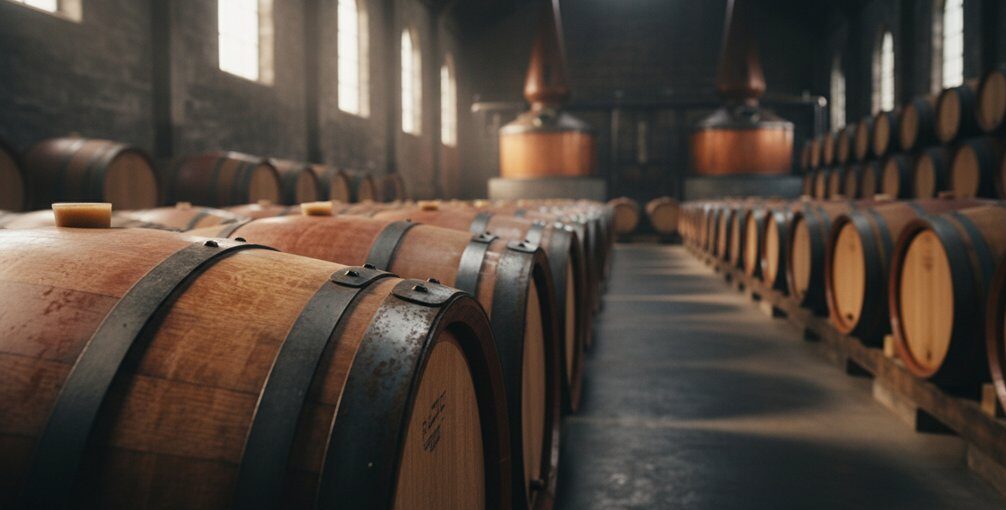
At the same time, they’re easier to handle compared to larger barrels, saving you labor and reducing storage complexity. You can stack and organize them efficiently, maximizing warehouse space.
Plus, their standardized size fits well with industry logistics, making transportation and inventory management smoother.
How to Choose Spirits Aged in 200L Barrels
Selecting the right spirit aged in 200L barrels hinges on understanding how this barrel size influences flavor, aroma, and texture.
When choosing, pay attention to the distillery’s aging process and barrel management, as these impact the spirit’s profile. Look for detailed product descriptions that mention barrel origin, char level, and aging duration. These clues help you gauge the spirit’s complexity and smoothness.
Don’t overlook the spirit’s category—whiskeys, rums, and other spirits respond differently to 200L barrels. Sampling or reading expert reviews can also guide your choice by highlighting how well the spirit balances barrel influence with its natural character.
Ultimately, focus on how the spirit aligns with your taste preferences and intended use, whether sipping neat or mixing in cocktails.
What 200L Barrels Mean for the Taste of Your Whiskey or Rum
When you savor whiskey or rum aged in 200L barrels, you’re tasting the perfect balance between wood influence and spirit character.
These barrels offer just enough surface area for the spirit to extract rich flavors like vanilla, caramel, and subtle spice without overpowering its natural qualities.
Because the barrel size encourages steady interaction between the wood and spirit, you get complexity and depth in every sip.
The 200L capacity also allows for ideal aging time, letting the spirit mellow and develop smoothness while maintaining vibrancy.
So, when you choose a spirit aged in these barrels, expect a harmonious blend of boldness and refinement that highlights both the craftsmanship and the unique qualities of the distillate.
This balance enhances your overall tasting experience.