
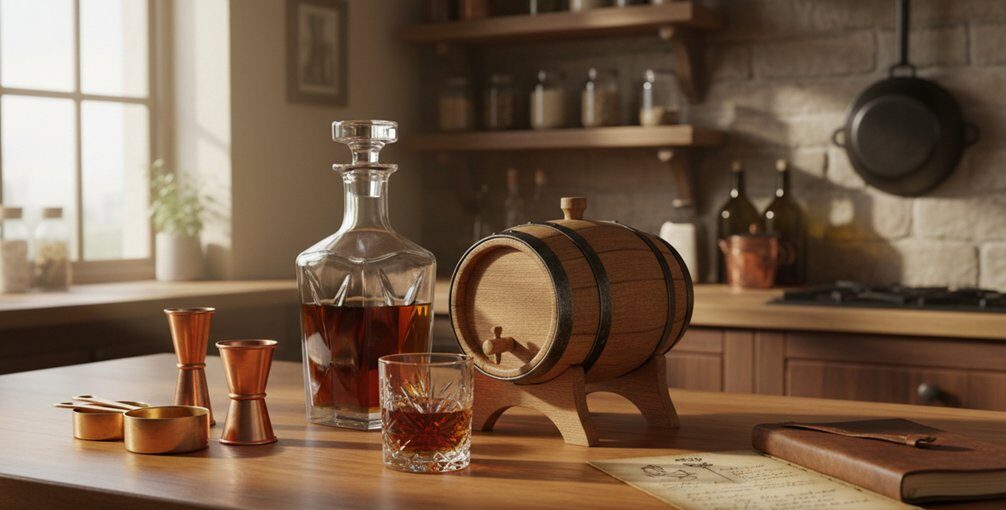
If you’ve ever wondered whether you can legally age whiskey at home, you’re not alone. While it might seem like a simple way to enhance flavor, the rules around it aren’t always straightforward. Federal laws provide some leeway, but state regulations can complicate things. Before you start, it’s important to understand what’s allowed and what could land you in trouble. There’s more to know than just sticking whiskey in a barrel.
Key Takeaways
- Aging commercially purchased whiskey at home is legal and does not require permits.
- Distilling or producing whiskey without a license is illegal and punishable by law.
- Federal law allows home aging, but state regulations vary, so check local laws first.
- Homemade aged whiskey must be for personal use only; selling it without permits is illegal.
- Use food-safe containers, store properly, and avoid adding substances to ensure safe aging.
Is It Legal to Age Whiskey at Home?
Wondering if you can legally age whiskey at home? The good news is, you can buy whiskey and store it in your own barrels or containers to let it mature over time.
There’s no law against personally aging already distilled whiskey in your home. Aging whiskey involves letting the spirit interact with wood, which changes its flavor and character.
Since you’re not distilling or producing alcohol yourself, just aging a purchased product, you’re generally within legal boundaries. However, you should only use whiskey you’ve legally bought—starting with legal whiskey is key.
Keep in mind, while aging at home isn’t illegal, selling or distributing homemade aged whiskey without proper permits can be a problem.
How Do Federal and State Laws Affect Home Whiskey Aging?
How do federal and state laws shape what you can do when aging whiskey at home?
Federally, it’s illegal to distill or age spirits for consumption without proper permits, regardless of quantity. The Alcohol and Tobacco Tax and Trade Bureau (TTB) strictly regulates this to prevent unlicensed production.
However, federal law doesn’t explicitly forbid you from aging commercially purchased whiskey in your own barrels or containers at home.
State laws vary widely; some states allow you to age whiskey privately if you buy it legally, while others have stricter rules or require permits.
You should check your specific state’s alcohol control regulations before attempting home aging.
Understanding both federal and state laws helps you avoid unintentional violations and enjoy your whiskey hobby responsibly.
What Are the Risks and Penalties for Illegal Whiskey Aging?
What happens if you age whiskey at home without following the law? You risk facing serious legal consequences.
Federal and state authorities strictly regulate whiskey aging to control alcohol production and ensure safety. If caught, you could face hefty fines, seizure of your equipment and product, and even criminal charges that might lead to jail time.
Additionally, illegal aging practices might expose you to health risks if the process isn’t done correctly. Law enforcement actively monitors and investigates unlicensed alcohol production, so it’s not something you can easily hide.
To avoid these risks and penalties, it’s crucial to understand and comply with all relevant laws before attempting to age whiskey at home. Staying informed protects both your legal standing and your personal safety.
What’s the Difference Between Legal Aging and Illegal Distilling?
Understanding the legal boundaries around aging whiskey at home requires knowing how it differs from illegal distilling.
When you age whiskey legally, you’re simply allowing purchased, already-distilled spirit to mature in barrels or containers. This process doesn’t involve creating alcohol, so it generally doesn’t violate laws.
Illegal distilling, however, means producing alcohol without a proper license—this includes fermenting ingredients and then distilling the liquid to make whiskey. Distilling is heavily regulated because it can be dangerous and impact taxes.
Illegal distilling involves unlicensed alcohol production, including fermentation and distillation, and is strictly regulated due to safety and tax concerns.
If you start distilling at home without permission, you risk fines, legal trouble, and confiscation of equipment.
How to Age Whiskey at Home Legally and Safely
Although aging whiskey at home is legal, you need to follow certain guidelines to do it safely and within the law.
First, ensure you’re only aging commercially purchased whiskey—distilling your own is illegal without proper permits.
Store your whiskey in a clean, food-safe container, away from direct sunlight and extreme temperatures. Maintain a stable environment to prevent spoilage or unwanted chemical changes.
Avoid adding anything that could be considered adulteration, as this can violate regulations. Always label your containers clearly and keep them for personal use only—selling homemade aged whiskey requires licensing.
Lastly, practice caution when handling alcohol to prevent accidents.
Can You Use Barrels to Age Whiskey at Home?
How exactly can you use barrels to age whiskey at home? You can definitely use small oak barrels designed for home aging.
These barrels allow your whiskey to interact with the wood, enhancing flavor and color over time. Make sure the barrel is new or properly charred to mimic traditional aging conditions.
Before filling, rinse it with water to remove any loose wood particles. Store the barrel in a cool, dark place and rotate it occasionally to ensure even aging.
Keep in mind that smaller barrels speed up the process due to more surface area contact.
While using barrels is legal for aging, distilling or purchasing unaged spirits may have legal restrictions. Always check your local laws before starting your home-aging project.
Best Legal Resources for Home Whiskey Aging
Where can you turn to ensure your home whiskey aging stays within the law? Start with the Alcohol and Tobacco Tax and Trade Bureau (TTB) website, the primary federal authority on alcohol regulations. They offer clear guidance on what’s legal regarding distillation and aging at home.
Next, check your state’s alcohol control board or liquor commission website, since state laws can vary significantly. Local law enforcement or city government websites may also provide useful insights on home alcohol production.
State alcohol control boards and local authorities offer key guidance on home alcohol production laws.
For more detailed questions, consider consulting a legal expert specializing in alcohol law.
Finally, online forums and whiskey enthusiast communities often share updated legal experiences and resources. Staying informed through these channels helps you age whiskey safely and legally at home.