
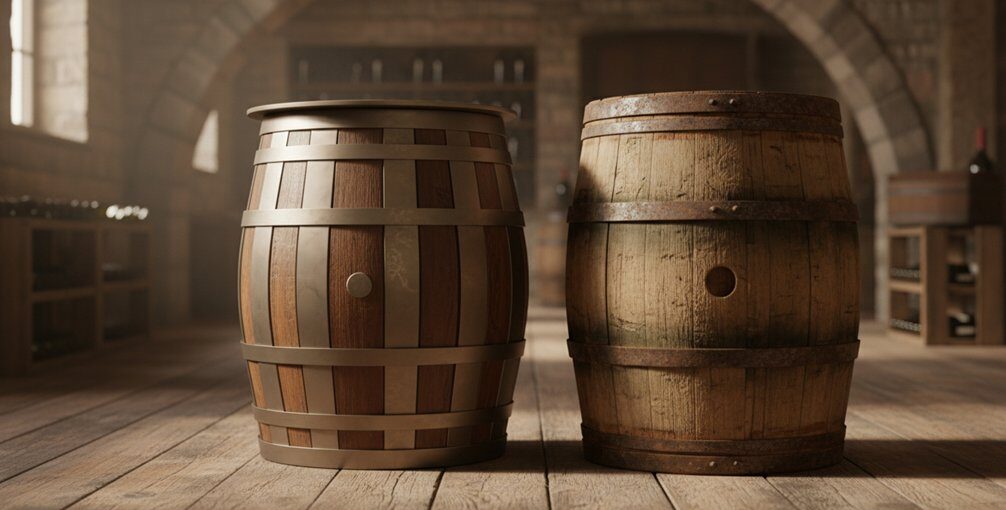
When choosing between hybrid and traditional barrels, you’re weighing more than just looks. Hybrid barrels promise lighter weight and better heat management, which can sharpen your shooting experience. Traditional barrels, though, bring a proven track record and simpler upkeep. Your decision depends on what you value most—performance, maintenance, or cost—but understanding these differences isn’t always straightforward. Let’s explore what sets these barrel types apart before you make your choice.
Key Takeaways
- Hybrid barrels offer improved accuracy and heat dissipation, enhancing performance during rapid firing compared to traditional barrels.
- Traditional barrels provide proven reliability, straightforward maintenance, and easier repairs with widely available parts.
- Hybrid barrels are lighter and more durable, combining steel and carbon fiber for better wear and corrosion resistance.
- Traditional barrels require regular cleaning to prevent corrosion, while hybrids need less maintenance due to protective coatings.
- Hybrid barrels have higher upfront costs but lower long-term upkeep, whereas traditional barrels are generally more budget-friendly initially.
Understanding Traditional and Hybrid Barrels
Although traditional barrels have been the standard for centuries, hybrid barrels are gaining popularity for their unique benefits.
When you look at traditional barrels, you’ll notice they’re usually made from a single material, like steel or aluminum, offering consistent performance.
Hybrid barrels, on the other hand, combine materials—often blending steel with lightweight alloys or carbon fiber. This mix aims to balance durability with reduced weight, giving you better handling without sacrificing strength.
You’ll find hybrid barrels often improve heat dissipation, helping maintain accuracy during extended use.
Understanding these differences helps you decide which barrel suits your needs, whether you prioritize the time-tested solidity of traditional barrels or the innovative features hybrid barrels bring to the table.
Why Traditional Barrels Are Known for Reliability
When you choose a traditional barrel, you’re relying on a design that has proven its worth over centuries of use.
Opting for a traditional barrel means trusting a time-tested design refined over centuries.
You benefit from a well-understood manufacturing process, making these barrels consistently reliable and easier to maintain. Their straightforward construction means fewer variables, reducing the chance of unexpected issues during use.
You’ll also find that traditional barrels handle a wide range of conditions without compromising performance, which adds to their trusted reputation.
Plus, replacement parts and expertise are widely available, so you’re never left struggling with repairs.
While newer designs aim to innovate, traditional barrels offer a dependable baseline you can count on, especially if consistent performance and ease of upkeep are your top priorities.
How Hybrid Barrels Boost Performance Compared to Traditional
Because hybrid barrels combine elements from both traditional and modern designs, they offer performance advantages that can elevate your shooting experience.
You’ll notice improved accuracy thanks to their unique rifling, which often blends polygonal and traditional grooves for better bullet stabilization. This design reduces barrel friction, allowing your rounds to travel faster and with greater consistency.
Hybrid barrels also tend to heat up more evenly, which helps maintain accuracy during rapid firing. Plus, their lighter weight compared to some traditional barrels means you can handle your firearm more comfortably and with less fatigue.
Durability and Maintenance: Hybrid vs. Traditional Barrels
Understanding the differences in durability and maintenance between hybrid and traditional barrels can help you make the best choice for your firearm.
Hybrid barrels often combine materials like steel and carbon fiber, giving you enhanced strength and resistance to wear. This means they generally handle heat and stress better, reducing the risk of warping or damage over time.
Hybrid barrels blend steel and carbon fiber for superior strength and heat resistance, minimizing wear and warping.
Traditional barrels, usually made entirely of steel, are proven and reliable but might require more frequent cleaning and careful upkeep to prevent corrosion and wear.
When maintaining hybrid barrels, you’ll find they need less frequent cleaning due to their heat resistance and protective coatings.
Traditional barrels demand more regular maintenance to keep them in optimal condition.
Choosing between them depends largely on how much effort you’re willing to put into upkeep and how durable you need your barrel to be.
How to Choose Between Hybrid and Traditional Barrels?
How do you decide which barrel suits your needs best? Start by considering your priorities.
If you want a barrel with low maintenance and excellent durability, a hybrid barrel might be your go-to. It blends materials to offer resistance against weather and wear.
On the other hand, if you value traditional craftsmanship and a classic aesthetic, a traditional barrel made from solid wood could be ideal.
Think about your environment too—hybrid barrels handle moisture better, while traditional barrels might require more care in damp conditions.
Also, factor in your budget; hybrids can be pricier upfront but save money on upkeep.
Ultimately, weigh durability, appearance, maintenance, and cost to pick the barrel that fits your lifestyle and preferences perfectly.