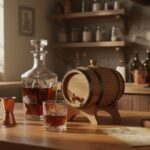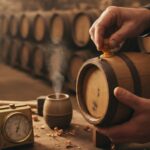
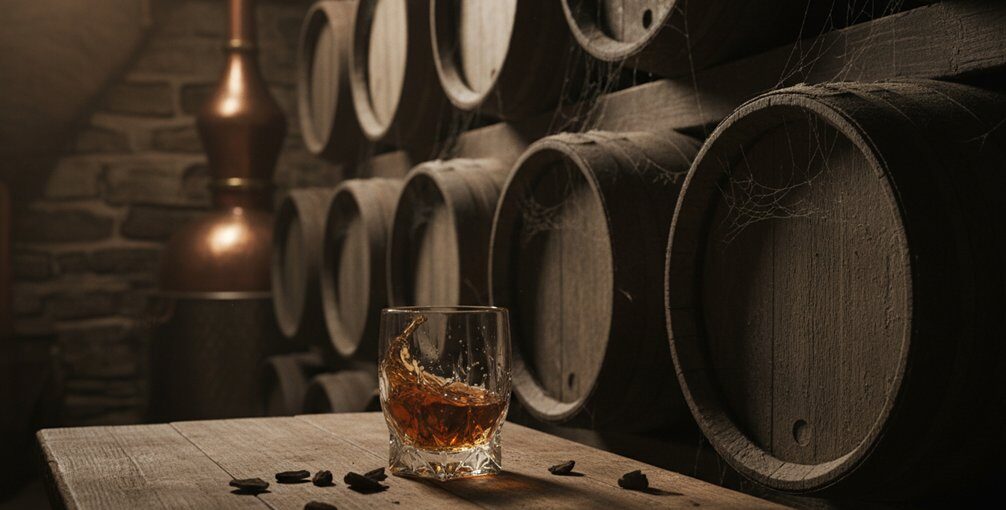
When you think about whiskey aging, you might picture large barrels quietly maturing for years. But small oak barrels change the game by speeding up the process through increased wood contact and oxygen exposure. This means you get complex flavors faster, but it also raises questions about how exactly the science works behind the scenes. Understanding these details can transform how you appreciate every sip.
What Happens During Whiskey Aging?
When whiskey ages, it interacts with the oak barrel in several important ways that shape its flavor and character.
You’ll notice the spirit slowly absorbs compounds like tannins, lignins, and vanillin from the wood, which add complexity and smoothness.
Over time, oxidation occurs as air seeps through the barrel, mellowing harsh notes and enhancing aromas.
The whiskey also undergoes evaporation—often called the “angel’s share”—which concentrates the flavors left behind.
Temperature and humidity fluctuations cause the wood to expand and contract, helping the whiskey penetrate deeper into the barrel, extracting more nuanced flavors.
This dynamic process transforms raw distillate into a rich, balanced drink.
Understanding these interactions helps you appreciate why aging is crucial for developing whiskey’s distinctive profile.
How Small Oak Barrels Speed Up Aging
The interaction between whiskey and oak barrels depends heavily on surface area and time. When you use small oak barrels, the surface area to volume ratio increases significantly. This means more whiskey is in direct contact with the wood, accelerating the extraction of compounds like tannins and lignins. As a result, the aging process speeds up because these chemical reactions happen faster.
You’ll also notice that smaller barrels facilitate quicker oxygen exchange through the wood. This controlled oxidation helps mellow harsh flavors and develop complexity more rapidly.
Since the whiskey interacts with the barrel more intensely, it doesn’t need as many years to mature compared to larger barrels. So, by choosing small oak barrels, you’re effectively speeding up aging without compromising the essential transformations that define quality whiskey.
What Small Oak Barrels Add to Whiskey Flavor and Aroma
Although small oak barrels accelerate aging, they also profoundly shape whiskey’s flavor and aroma. When you use smaller barrels, the whiskey interacts more intensely with the wood’s surface, extracting richer compounds like vanillin, tannins, and lignins.
You’ll notice bolder notes of caramel, spice, and toasted oak developing faster than in larger barrels. The concentrated contact also encourages complex layers of flavors to emerge, enhancing the whiskey’s depth and character.
Plus, the aroma becomes more vibrant, with pronounced hints of vanilla, toasted nuts, and subtle smokiness. By choosing small barrels, you’re not just speeding up aging; you’re actively crafting a whiskey with intensified sensory qualities that might take years to develop in standard barrels.
This makes small oak barrels a powerful tool for flavor and aroma refinement.
How Oxygen and Temperature Affect Small Barrel Aging
Since oxygen and temperature play crucial roles in whiskey maturation, understanding their effects on small barrel aging can help you optimize the process.
Small barrels expose whiskey to oxygen more quickly due to their higher surface area-to-volume ratio. This increased oxygen contact accelerates oxidation, enhancing flavor development but requiring careful monitoring to avoid over-aging.
Temperature fluctuations also significantly impact aging. Warmer temperatures speed up chemical reactions, intensifying wood extraction and maturation, while cooler conditions slow these processes.
In small barrels, temperature swings can cause more pronounced expansion and contraction, pushing whiskey deeper into the wood and extracting complex compounds faster.
To get the best results, you’ll want to control oxygen exposure and maintain stable temperatures, ensuring your whiskey matures evenly without unwanted harshness or premature aging.
How to Pick the Right Barrel Size for Great Whiskey
Understanding how oxygen and temperature affect whiskey in small barrels helps you see why barrel size matters so much.
Smaller barrels have a higher surface-area-to-volume ratio, meaning your whiskey interacts more with the wood, speeding up flavor development. If you want quicker maturation and bolder flavors, a 5-15 gallon barrel might be ideal.
But keep in mind, smaller barrels also increase the risk of over-extraction, which can lead to bitterness.
Larger barrels, like 30-53 gallons, slow the process, offering more subtle, balanced profiles over time.
When picking the right size, consider your aging goals, timeline, and flavor preferences. Don’t just choose based on convenience; select a barrel size that aligns with the whiskey character you want to craft.
Conclusion
By choosing small oak barrels, you speed up whiskey aging without sacrificing quality. The increased wood contact and oxygen exposure help develop rich flavors and complex aromas faster than larger barrels. You’ll notice how temperature changes further refine the spirit, giving it depth and character in less time. So, if you want great whiskey with bold taste and faster turnaround, small barrels are a smart choice to enhance your aging process effectively.