
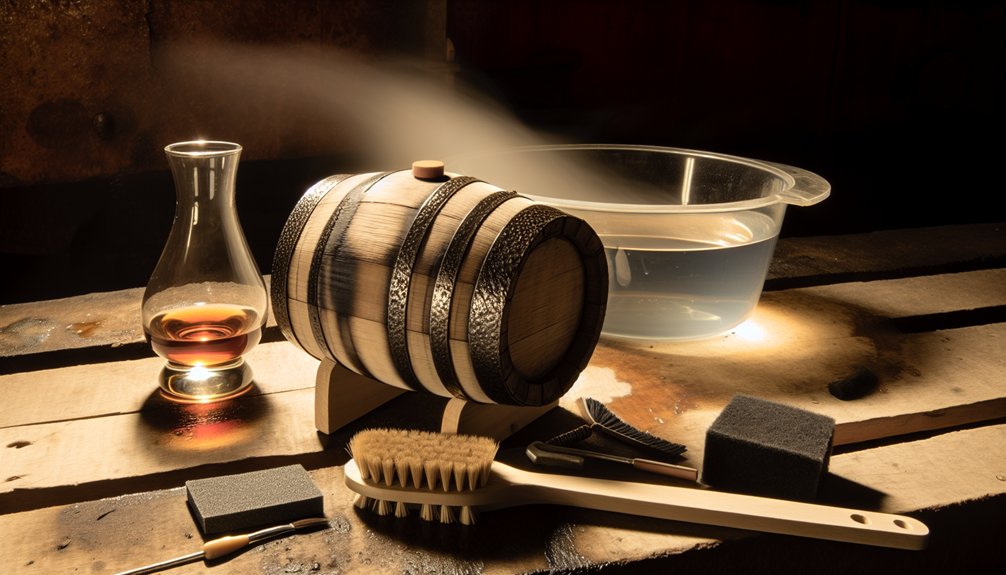
You can get a lot more life out of a small whiskey barrel, but you’ve got to start by deciding if it’s even worth saving. Check for cracks, rot, and loose hoops, then rehydrate it so the staves swell and tighten up. If it still seeps, you’ll need a smarter fix than wax or wishful thinking. Then you can clean it without stripping the oak—and decide whether a fresh toast or char makes sense…
Inspect the Barrel (Worth Saving or Not?)
Before you reuse a small whiskey barrel, inspect it closely to decide whether it’s worth saving.
Check the staves for deep cracks, rot, or soft spots; if you can press a fingernail in, it’s likely compromised. Look for missing wood, warped ends, or gaps that run the full length of a stave.
Examine the hoops: they should sit tight and even, with no heavy rust flakes, sharp edges, or broken nails.
Sniff inside for sour, moldy, or chemical odors that signal contamination. Shine a light through the bunghole and look for fuzzy growth, slime, or insect damage.
If the barrel feels loose, sheds blackened wood, or shows structural splits, retire it safely.
Rehydrate It So the Staves Swell
If your barrel’s dried out, you can rehydrate it to swell the staves and close small gaps.
Start by rinsing out dust and loose char with cool water, then drain.
Stand the barrel upright and fill it one-third with warm (not hot) water.
Insert the bung, roll the barrel so water contacts every seam, and let it sit 30–60 minutes.
Top up to two-thirds, roll again, and wait another hour.
Finally, fill completely and leave it overnight in a tray to protect surfaces.
Keep it out of direct sun so the exterior doesn’t dry while the inside hydrates.
In the morning, empty, rinse once, and let it drip-dry briefly before you refill it.
Stop Small Barrel Leaks After Swelling
Even after swelling, a few pinhole drips can stick around, so track the exact seam first and give the barrel one more controlled hydration cycle.
Fill it with warm water, stand it on the leaky end, and rotate every 20–30 minutes so the joint stays wet without over-soaking the whole barrel.
If it still weeps, tighten what you can: tap the hoops down evenly with a rubber mallet, working around the circumference in small steps.
Check the bung, too—replace a cracked bung or wrap it with food-safe PTFE tape for a better seal.
For stubborn seams, rub food-grade barrel wax onto the outside of the damp area, then let it set and retest with water overnight.
Stop once it holds.
Clean the Barrel Without Stripping Oak
Once the barrel holds water, clean it gently so you don’t wash out the oak character you want to keep.
Dump the swelling water, then rinse with warm (not hot) water and roll the barrel to wet every surface.
Avoid soap, bleach, or harsh detergents; they soak into wood and can taint your next fill.
If you smell sour notes, add a mild citric-acid rinse (about 1 tbsp per quart), swirl for a minute, and drain promptly.
Follow with two plain-water rinses.
For stubborn film, use a soft bottle brush through the bunghole and light pressure—don’t scrape or sand.
Let it drain upside down, then air-dry briefly until damp, not bone-dry.
Refit the bung loosely.
Re-Toast or Re-Char the Barrel Interior
Refresh the barrel’s flavor by re-toasting or re-charring the interior, but treat it as a controlled reset rather than a full rebuild.
Choose re-toast if you want more vanilla, caramel, and gentle spice; choose re-char if you need to tame sour notes and boost smoky, deeper oak character.
Remove the head or work through the bunghole with a small torch; keep water nearby and ventilate well.
For a re-toast, warm the staves evenly until they smell like baking bread and light caramel, not ash.
For a re-char, ignite briefly, then rotate to get a thin, uniform “alligator” layer.
Stop before you blister through. Let it cool fully, then rinse quickly to remove loose carbon.
Fill It Again: Aging Timelines & Infusions
Before you commit to a full fill, decide whether you’re aging a spirit, finishing it, or building an infusion, because each path changes both timeline and risk.
In a small barrel, extraction happens fast, so you’ll taste often and plan shorter runs. For aging new make or unaged whiskey, expect weeks to a few months, not years; stop when oak, vanilla, and tannin feel balanced.
For finishing a mature spirit, target days to a few weeks, since you’re adding accent notes, not structure.
For infusions, keep proofs and ingredients in mind: higher proof pulls spice and citrus oils quickly, while lower proof favors fruit and sweetness.
Strain solids before filling, and rack promptly once flavors peak.
Store the Barrel Between Batches
After you’ve drained a batch, you’ll get the best results by storing the barrel so it stays clean, stays swollen, and doesn’t grow anything funky.
If you’ll refill within a week, rinse with warm water, drain completely, bung it, and keep it in a cool, shaded spot with stable temperature. Rotate it every day or two so staves don’t dry at the top.
If it’ll sit longer, don’t store it bone-dry. Use a holding solution: dissolve 2 g potassium metabisulfite and 1 g citric acid per liter of water, fill halfway, slosh to wet all surfaces, then top off and bung.
Check monthly, replace as needed, and keep it upright to prevent leaks and warping.
Conclusion
You’ve got a small whiskey barrel that can keep giving if you treat it right. Inspect it, tighten what’s loose, and rehydrate it so the staves swell and seal. If it still weeps, fix leaks after swelling, then clean gently so you don’t strip the oak. Re-toast or re-char for a flavor reset, then refill and track your aging time. Between batches, store it properly so it won’t dry out.