You can’t improve whiskey at home if you store it like a spare bottle on a sunny shelf. You need to pick your method—small barrel, staves, or just careful bottle storage—then control the basics: keep it upright, tightly sealed, and steady at about 60–70°F with moderate humidity. Block UV light and avoid stagnant, musty air. Get those wrong, and you’ll taste it—so what’s the safest setup in your space?
Pick a Home Aging Method: Barrel, Staves, or Bottle
Where should you start when you want to age whiskey at home—barrel, staves, or just the bottle?
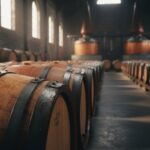
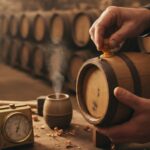
Pick based on how fast you want results and how much control you need. A small charred oak barrel gives the most “real” extraction, but it can over-oak quickly and you’ll lose more to evaporation, so you must taste often.
Oak staves, spirals, or cubes in glass let you dial in oak level, toast, and contact time while keeping losses low; you can also blend batches easily.
Bottle aging won’t add oak, but it can mellow harsh notes through slow oxidation and integration, especially in higher-proof pours.
Match method to your patience and palate goals.
Store Your Bottle or Barrel Safely (Upright, Sealed, Stable)
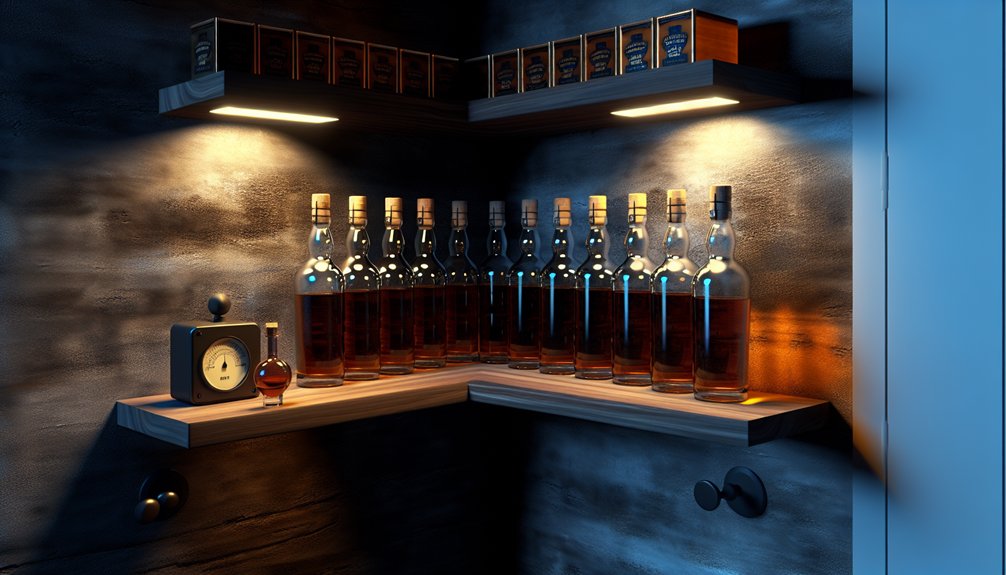
Three rules keep home-aged whiskey from going sideways: store it upright, keep it tightly sealed, and hold it at a stable temperature out of direct light.
Keep bottles vertical so high-proof spirit doesn’t sit on the cork and soften it, which can cause leaks or off notes. If you’re using a small barrel, set it on a cradle with the bung up and the heads supported; don’t leave it rolling or resting on the bung.
Seal everything: tighten caps, check bungs, and use fresh gaskets or parafilm if a closure creeps.
Stability matters too. Pick a spot that won’t get bumped, vibrated, or tipped, and keep it away from heaters, windowsills, and garage doors.
Label dates, volumes, and proofs so you can track changes cleanly.
Set the Right Temperature for Home Whiskey Aging
Although whiskey doesn’t “age” much once it’s in glass, temperature still shapes how your home-aging experiment behaves by controlling evaporation, extraction, and oxidation.
Keep your whiskey in a cool, steady spot: aim for 60–70°F (16–21°C). Warmer temps speed wood extraction in small barrels and can push harsh tannins, while also increasing “angel’s share” losses.
Colder temps slow reactions so much that your results may stall. Stability matters more than chasing a perfect number, so avoid garages, attics, and kitchens where daily swings are big.
If you’re using a mini barrel, you’ll get faster changes, so check flavor often and move it cooler once it hits your target. A simple thermometer nearby keeps you honest.
Keep Light Out to Protect Flavor and Color
If you let sunlight hit your whiskey day after day, you’ll speed up oxidation and fade both flavor and color.
UV and bright indoor light can break down delicate compounds, muting vanilla, fruit, and spice notes while bleaching the spirit’s amber tone.
Keep bottles in a dark cabinet, a closed box, or a dedicated closet shelf away from windows and skylights.
If you display a bottle, use low, indirect lighting and rotate it back into darkness after short periods.
Choose tinted glass or store clear bottles inside an opaque sleeve.
For decanters, pick ones with UV-resistant glass and a tight stopper, then keep them shaded.
You’ll preserve aroma, hue, and balance longer.
Balance Humidity and Airflow to Avoid Leaks and Mustiness
Because your whiskey’s seal depends on its surroundings, you’ll want storage that stays moderately humid with steady airflow.
Aim for roughly 50–70% relative humidity so corks don’t dry, shrink, and seep, but labels and wooden shelves don’t get soggy. If your room runs dry, add a small humidifier or a shallow water tray nearby (not under bottles). If it’s damp, use a dehumidifier and keep bottles off concrete floors with a rack or pallet.
You also need gentle air movement.
Don’t seal bottles in airtight bins; trapped moisture breeds musty odors and can taint cardboard packaging. Instead, store in a ventilated cabinet and keep bottles spaced so air can circulate. Avoid vents blowing directly on corks.
Taste on a Schedule, Know When to Stop, Fix Off-Flavors
Once you’ve locked in stable humidity and airflow, keep your aging on track by tasting at set intervals rather than whenever curiosity hits.
Pull a small sample with a thief or syringe, then recap immediately to limit oxygen exposure. Keep notes on aroma, sweetness, tannin, heat, and finish so you can spot trends, not mood swings.
Decide your stop point before you start: target proof, color, oak level, or a flavor profile you’re chasing.
When the whiskey turns overly dry, bitter, or woody, stop aging and transfer it to glass with a tight seal.
If you notice sulfur, cardboard, or musty notes, check seals, reduce headspace, and move it cooler.
For harsh ethanol bite, let it rest, then blend with a fresher portion if needed.
Conclusion
You’ll get better home-aged whiskey when you control the basics and stay consistent. Pick your method, then store it upright, sealed tight, and steady. Keep temps around 60–70°F (16–21°C), block sunlight with a dark cabinet, and aim for 50–70% humidity with gentle airflow so nothing dries out or turns musty. Taste on a schedule, stop when it’s right, and correct small flaws early.