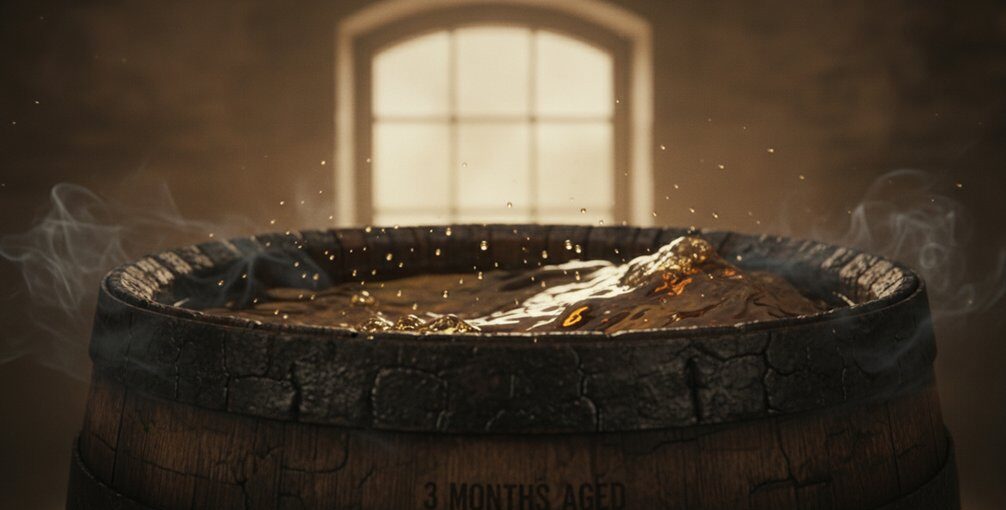
When you start aging whiskey, the first three months are surprisingly transformative. You’ll notice the sharp alcohol bite begins to mellow as the spirit interacts with the barrel wood, drawing out subtle hints of sweetness and spice. But it’s not just the wood at work—temperature, humidity, and oxidation all play critical roles in shaping the early character. Understanding these changes will give you a clearer picture of how whiskey truly begins its journey.
Key Takeaways
- Harsh alcohol notes soften as basic flavor foundations develop during the first three months of aging.
- Whiskey extracts vanillin, tannins, and lignins from barrel wood, adding sweetness, spice, and amber color.
- Temperature and humidity control aging speed, influencing flavor extraction and alcohol-water balance.
- Oxygen exposure initiates oxidation, smoothing harshness and creating subtle fruity and nutty aromas.
- Chemical reactions like esterification and Maillard reactions introduce fruity, caramel, and toasted flavors early on.
Overview of Whiskey Aging in the First 3 Months
Although it may seem like just time passing, the first three months of whiskey aging are crucial for developing its basic character.
You’ll notice that during this time, the whiskey begins to mellow as harsh alcohol notes soften. The spirit settles, and early flavors start to emerge, setting the foundation for what’s to come.
Temperature and humidity play a big role in how quickly these changes happen, so your whiskey’s environment matters a lot.
Even though it’s still young, subtle chemical reactions start to take place, helping the spirit transform from raw distillate into something more balanced and complex.
This initial phase is essential because it shapes the whiskey’s overall profile before it interacts deeply with the barrel wood later on.
How Whiskey Interacts With Barrel Wood Early on
When whiskey starts aging, it doesn’t just sit quietly; it actively draws compounds from the barrel wood, which shapes its flavor and color. As you watch the spirit seep into the wood’s charred layers, it extracts vanillin, tannins, and lignins that add sweetness, spice, and complexity.
Early on, these compounds soften the raw alcohol bite, making the whiskey smoother. The wood also imparts rich amber hues as pigments dissolve into the liquid.
You’ll notice that the barrel’s porous nature allows the whiskey to expand and contract with each temperature change, pulling in more flavor from deeper within the wood. This early interaction lays the foundation for the whiskey’s character, setting the stage for the transformations that continue as it ages further.
How Temperature and Humidity Affect Early Whiskey Aging
The interaction between whiskey and barrel wood sets the stage, but temperature and humidity play a big role in how these early flavors develop.
When temperatures rise, the whiskey expands, pushing deeper into the wood and extracting more compounds. Cooler temperatures slow this process, making flavor development more gradual.
Humidity affects how much water or alcohol evaporates; in high humidity, more alcohol evaporates, which can mellow the spirit, while low humidity causes more water loss, concentrating the alcohol.
You’ll notice that in warmer, drier environments, the whiskey ages faster but might become harsher, whereas cooler, more humid climates encourage smoother profiles.
Understanding these conditions helps you appreciate how your whiskey’s environment influences its unique character right from the start.
How Oxidation Shapes Whiskey’s Flavor in Early Aging
Because oxygen gradually seeps through the barrel wood, it interacts with the whiskey and triggers chemical reactions that shape its flavor early on.
You’ll notice that this slow oxidation softens harsh alcohol notes, making the whiskey smoother and more approachable. As oxygen melds with the spirit, it also helps develop subtle fruity and nutty aromas that start to emerge within those first few months.
While oxidation begins the flavor transformation, it doesn’t overpower the whiskey but gently guides its evolution. This early oxygen exposure balances the spirit’s raw intensity without losing its core character.
Chemical Reactions Shaping Whiskey Flavor Early On
Although oxidation plays a key role, several other chemical reactions work behind the scenes to shape whiskey’s flavor in its early stages.
As you age the spirit, esterification takes place—alcohols and acids combine to form esters, which bring fruity and floral notes to your whiskey.
You’ll also find that Maillard reactions occur, where sugars and amino acids react, adding complexity with hints of caramel and toasted flavors.
Additionally, hydrolysis breaks down wood components, releasing tannins and lignins that contribute bitterness and spice.
These processes happen simultaneously, interacting to build your whiskey’s early character.
Understanding these reactions helps you appreciate how quickly the spirit evolves, setting the foundation for the deeper transformations that occur as aging continues.
How Barrel Char Level Influences Early Whiskey Aging
When you choose a barrel with a specific char level, you directly influence how your whiskey interacts with the wood during those crucial early months of aging.
A heavier char creates a thicker layer of charcoal that filters out unwanted compounds and smooths the spirit quickly. This intense char also releases more vanillin and caramelized sugars, giving your whiskey richer initial flavors.
On the other hand, a lighter char exposes more wood tannins early on, adding sharper, more astringent notes. Medium char balances these effects, offering moderate filtration and flavor extraction.
Your choice shapes the chemical exchange, absorption, and extraction rates, setting the foundation for your whiskey’s character before maturation advances.
Essentially, char level steers the early flavor profile and smoothness, making it a powerful tool in crafting your desired spirit.
Early Signs of Whiskey Maturation
The char level you select sets the stage, but it’s the early signs of maturation that reveal how your whiskey is truly evolving.
In these first few months, you’ll notice subtle shifts in color as the spirit takes on richer amber hues from the wood. Flavor compounds start to develop, introducing hints of vanilla, caramel, and oak.
You may also detect a softening of harsh alcohol notes, signaling the spirit’s gradual mellowing. The interaction between the whiskey and the barrel’s charred surface begins to smooth out the edges, while the liquid extracts tannins and other flavor elements.
These early changes are crucial—they show your whiskey moving beyond raw distillate towards a more balanced, complex profile that hints at its future depth and character.
Why the First 3 Months Matter for Whiskey Aging
Since the first three months set the foundation for your whiskey’s character, you can’t underestimate their impact.
During this period, your whiskey begins extracting essential flavors from the barrel’s wood—vanilla, caramel, and subtle spices start to develop. The spirit also interacts with oxygen through the barrel’s pores, softening harsh alcohol notes and enhancing smoothness.
These initial changes shape the whiskey’s complexity and balance, influencing every sip you’ll enjoy later. While aging continues beyond this stage, the first 90 days are critical for establishing the core profile.
Skipping this phase or rushing it would mean missing out on the foundational transformation that defines quality whiskey.