If you want to shape your whiskey’s flavor, understanding the impact of different oak types is essential. Each oak variety brings its own set of nuances, from the sweetness of American oak to the spice of French oak and the boldness of European oak. By choosing the right wood and adjusting how it’s toasted or charred, you can create a profile that matches your vision. But where do you start with so many options?
Key Takeaways
- Choose American oak for sweet, vanilla, and caramel flavors or European oak for robust tannins and dried fruit notes.
- Use French oak to add delicate spice and refined complexity to your whiskey profile.
- Experiment with toasting and charring levels to influence sweetness, smokiness, and smoothness in the whiskey.
- Blend different oak types or finish barrels with wine, rum, or sherry to create layered, unique flavor profiles.
- Select alternative oaks like Japanese mizunara for exotic aromas, adjusting aging time and monitoring flavor development closely.
Comparing American, French, and European Oak Barrels
When you choose between American, French, and European oak barrels, you’re deciding how your whiskey will develop its character.
American oak, known for its bold influence, imparts strong vanilla and caramel notes with a smooth sweetness.
American oak delivers bold character with rich vanilla and caramel flavors, wrapped in smooth, sweet notes.
French oak offers a subtler touch, adding delicate spice and tannins, which create a refined complexity.
European oak tends to bring robust, rich flavors with pronounced tannins and a touch of dried fruit, adding depth and intensity.
Each type also varies in grain tightness, affecting how quickly the whiskey interacts with the wood.
American oak’s wider grain accelerates aging, while European and French oaks’ tighter grain slow it down, allowing more nuanced flavor development.
Picking the right barrel means balancing these traits to shape your whiskey’s unique profile.
How Different Oak Types Shape Whiskey Flavor Profiles
Choosing between American, French, and European oak barrels sets the stage for how your whiskey will taste, but understanding how each oak type shapes flavor profiles takes customization further.
American oak, rich in vanilla and caramel notes, adds sweetness and a smooth finish.
French oak introduces spicy, tannic elements with hints of clove and baking spices, offering more complexity.
European oak tends to impart robust, dried fruit and toasted flavors, giving your whiskey a deeper, richer character.
Each oak’s grain density also influences extraction speed and intensity, so you’ll notice differences in how flavors develop over time.
How to Choose the Right Oak for Your Whiskey Style
To match your whiskey style with the perfect oak, you need to consider how each type complements the flavor characteristics you want to highlight.
If you prefer a rich, robust whiskey, American white oak offers vanilla and caramel notes that enhance sweetness and smoothness.
For a spicier, more complex profile, European oak introduces tannins and dried fruit flavors, ideal for bold styles.
Japanese oak (mizunara) brings unique aromas like sandalwood and coconut, perfect if you want an exotic twist.
Also, think about your whiskey’s aging time—some oaks impart flavors faster, while others develop more gradually.
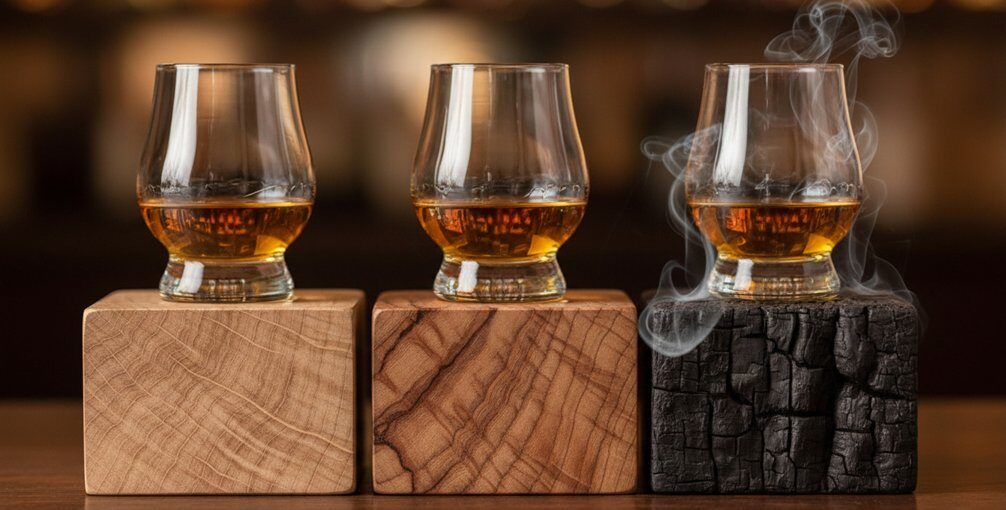
How Toasting and Charring Change Your Whiskey’s Flavor
The process of toasting and charring the inside of your oak barrels plays a crucial role in shaping your whiskey’s flavor profile.
Toasting gently heats the wood, releasing sweet, caramelized notes like vanilla, honey, and spice. It also softens tannins, making your whiskey smoother.
Toasting wood unlocks sweet caramel notes and mellows tannins for a smoother whiskey experience.
Charring, on the other hand, burns the wood’s surface, creating a layer of charcoal that filters impurities and adds smoky, rich flavors such as toasted coconut or dark chocolate.
The level of char—from light to heavy—affects the intensity of these flavors and how the whiskey interacts with the wood.
Experimenting With Oak Blends and Barrel Finishes
Building on how toasting and charring influence your whiskey’s flavor, you can further customize your spirit by experimenting with different oak blends and barrel finishes.
Mixing staves from American, French, or other oak types in one barrel allows you to balance vanilla sweetness, spice, and tannins uniquely.
You can also try finishing your whiskey in barrels previously used for wine, rum, or sherry to layer additional complexity and character.
Tips for Aging Whiskey Using Alternative Oak Species
While traditional American and French oak remain popular choices, exploring alternative oak species can unlock unique flavors and aromas in your whiskey.
Start by selecting oaks like Mizunara, Spanish, or Hungarian varieties, each offering distinct profiles—from sandalwood notes to rich spice.
Use smaller barrels or staves to increase wood contact, speeding flavor extraction. Monitor aging closely; alternative oaks may react differently, so taste regularly to avoid overpowering your whiskey.
Consider toasting or charring these woods lightly to balance tannins and enhance sweetness.
Blending whiskeys aged in different oak species can also create complex, layered results.
Lastly, document your process meticulously so you can replicate or adjust your method.
With careful experimentation, you’ll craft a truly personalized whiskey experience.