If you’re looking to age whiskey at home, you don’t have to rely on traditional barrels. Oak alternatives like chips, staves, spirals, and cubes offer practical ways to enhance flavor without the space or expense of full barrels. Each option interacts differently with your spirit, giving you control over the aging process. But what about other woods or even more unconventional materials? Understanding these options can change the way you approach home aging.
Key Takeaways
- Oak chips and staves offer fast, controlled flavor infusion for home whiskey aging with customizable toasting levels.
- Wood spirals and cubes provide increased surface area for quicker, complex tannin and aromatic release in small batches.
- Non-oak options like cherry, maple, and hickory add unique fruity, caramel, or smoky notes to whiskey profiles.
- Sanitizing and proper soaking of wood alternatives prevent contamination and over-dilution during aging.
- Using reusable, compact wood alternatives allows flexible, cost-effective whiskey aging without bulky barrels.
Why Use Oak Alternatives for Aging Whiskey at Home
Although traditional oak barrels have long been the standard for aging whiskey, you might find that oak alternatives offer practical benefits when aging whiskey at home.
For one, oak barrels can be expensive and bulky, making them less accessible for hobbyists or those with limited space. Oak alternatives, like oak chips, staves, or spirals, allow you to infuse your whiskey with similar flavors much faster and with more control.
You can customize the intensity and profile of the wood influence without committing to years of aging. Plus, these alternatives are easier to store, clean, and reuse.
Tips for Preparing and Using Oak Alternatives Safely
When using oak alternatives to age your whiskey, you need to prepare them properly to ensure safety and achieve the best flavor results.
Always start by sanitizing your oak chips, staves, or spirals with boiling water or food-grade alcohol to remove contaminants. Avoid using alternatives treated with chemicals or preservatives, as they can spoil your whiskey.
Begin by sanitizing oak alternatives with boiling water or food-grade alcohol to ensure purity and prevent spoilage.
Soak the wood briefly to soften it, but don’t over-soak, which might dilute your spirit. Use food-grade containers that seal well to prevent oxidation.
Monitor your whiskey regularly—taste it every few days to avoid over-aging. Keep your aging setup in a cool, dark place to maintain consistent conditions.
Finally, always label your batches with dates and wood type to track progress and ensure safety throughout the aging process.
How Oak Chips and Staves Change Whiskey Flavor
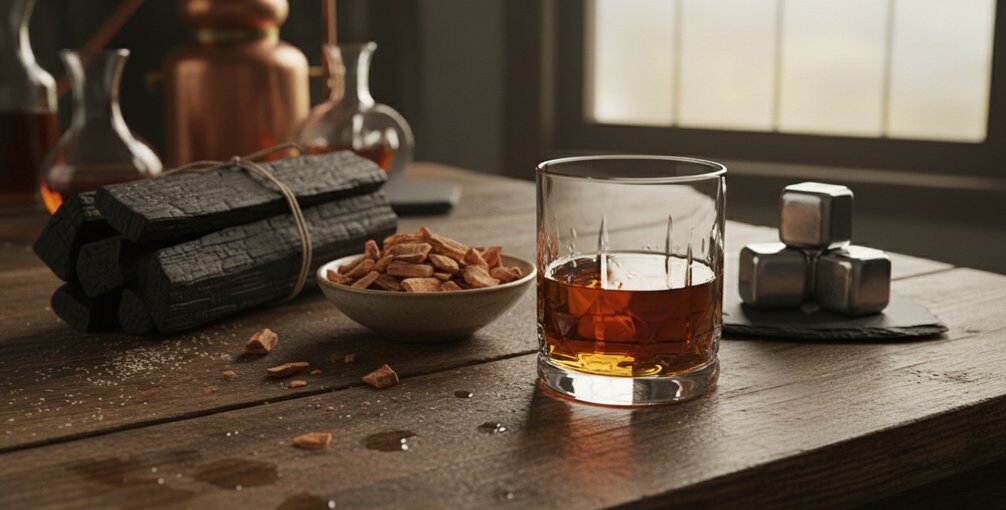
Since oak chips and staves come into direct contact with your whiskey, they play a crucial role in shaping its flavor profile. When you add them, they release tannins, lignins, and vanillin, which contribute to the whiskey’s complexity.
The size and surface area of chips or staves affect extraction speed—chips impart flavors faster due to more exposure, while staves offer a slower, more controlled aging. Toasting or charring these pieces also influences taste, adding notes like caramel, spice, or smoke.
Wood Spirals and Cubes as Whiskey Aging Tools
You can take aging your whiskey a step further by using wood spirals and cubes, which offer a unique way to infuse flavor.
These compact tools provide a larger surface area than traditional chips, speeding up the aging process and allowing you to customize the intensity of wood influence.
Wood spirals, often made from oak or other woods, twist through your spirit, releasing complex tannins and aromatic compounds.
Wood spirals infuse your spirit with rich tannins and deep aromatic layers for a complex flavor experience.
Cubes, on the other hand, offer a consistent, uniform exposure, making it easier to control flavor development.
Both options let you experiment with different wood types or toasting levels to match your taste preferences.
Plus, their small size fits easily into bottles or jars, making them perfect for home aging setups without needing bulky barrels.
Toasted Coconut Shells as Oak Alternatives for Aging Whiskey
Although oak remains the classic choice for aging whiskey, toasted coconut shells offer a compelling alternative that can add unique flavors and aromas.
When you toast coconut shells, you activate natural sugars and oils, which infuse your whiskey with hints of tropical richness and subtle nuttiness. These shells are dense and porous, allowing gradual interaction with the spirit, much like oak.
You can easily toast and prepare them at home, giving you control over the intensity of the flavor profile. Plus, coconut shells are eco-friendly and sustainable, making them an attractive option if you want to experiment responsibly.
Just remember to toast them evenly and avoid burning, as burnt shells can introduce bitter notes.
Comparing Flavor Profiles of Non-Oak Wood Types for Aging
How do different non-oak woods shape the flavor of aging whiskey? When you choose alternatives like cherry, maple, or hickory, each imparts unique characteristics.
Cherry wood often adds subtle fruity and sweet notes, enhancing complexity without overpowering.
Maple tends to introduce mild caramel and vanilla layers, offering a smooth, mellow finish.
Hickory, on the other hand, delivers a stronger smoky and earthy profile, which can deepen the whiskey’s richness.
Unlike oak’s classic tannins and vanillin, these woods interact differently with the spirit, creating distinct taste experiences.
How to Experiment and Adjust Aging Time With Oak Alternatives
Since non-oak woods interact with whiskey differently, adjusting your aging time becomes essential to achieve the desired flavor balance.
Start by testing small batches with your chosen wood alternative, checking the flavor every few days or weeks. Take detailed notes on taste, aroma, and color changes to track progress.
Begin with small batches, tasting regularly and noting flavor, aroma, and color to monitor your whiskey’s development.
Remember, some woods may impart strong flavors quickly, so shorter aging might work better. If the flavor feels too intense or harsh, reduce the contact time; if it’s too mild, extend it.
Don’t hesitate to blend batches aged for different periods to find the perfect profile. Experimenting patiently and methodically ensures you tailor the aging process to your wood choice, creating a unique whiskey that suits your palate.