If you’re thinking about aging whiskey at home, you’ll want to weigh the costs before diving in. Between buying barrels or kits and managing factors like evaporation, expenses can add up quickly. But beyond the price tag, there’s the question of whether the unique flavors and experience justify the investment. Before you decide, it’s important to understand what this process truly entails and how it might impact your whiskey journey.
Key Takeaways
- Small oak barrels and aging kits cost between $30 and $200, impacting initial investment and potential flavor quality.
- Aging requires a cool, dark, and humid space, which may need dedicated room or equipment for optimal conditions.
- Patience is essential as aging takes months or years, tying up money and delaying the enjoyment or resale of whiskey.
- Challenges like evaporation loss, temperature swings, and barrel maintenance can increase costs and complicate the process.
- Cost-saving methods include using affordable base spirits, smaller barrels, reusing barrels, and controlling aging environment carefully.
Essentials for Aging Whiskey at Home
Before you begin aging whiskey at home, you’ll need a few key items to get started.
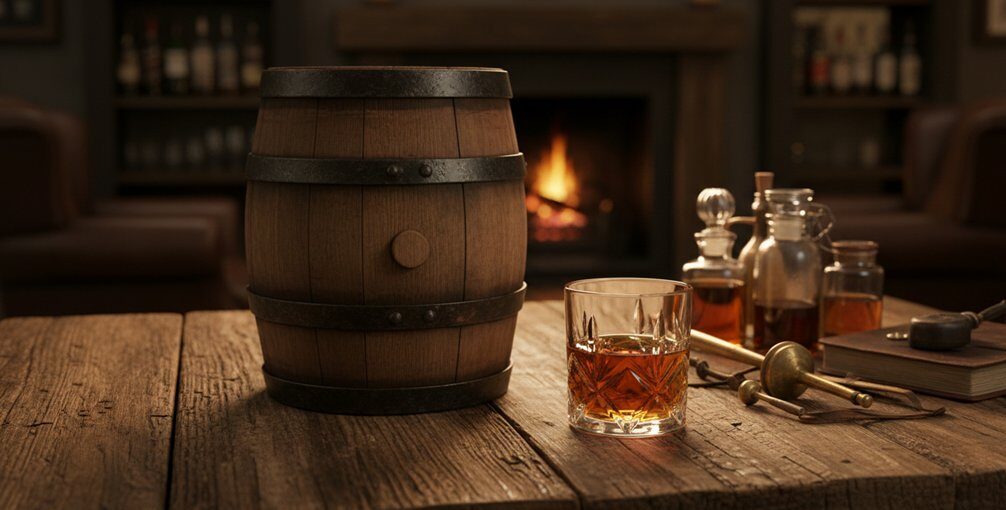
First, choose a suitable aging vessel—most commonly, a small oak barrel or an oak aging kit. Oak is essential because it imparts flavor and color during the aging process.
You’ll also want a good quality, unaged or lightly aged whiskey as your base. A glass container with oak chips can work if a barrel isn’t an option, but barrels provide a more authentic experience.
Don’t forget a proper storage space; it should be cool, dark, and have consistent temperature and humidity to ensure the whiskey ages well.
Lastly, patience is crucial—you’ll need to check your whiskey periodically but resist the urge to rush the process.
Costs of Barrels and Aging Kits for Whiskey Aging
Once you’ve gathered your aging supplies and chosen a suitable storage spot, it’s important to consider the costs involved in acquiring barrels or aging kits.
Barrels vary widely in price depending on size, wood type, and craftsmanship. A small oak barrel might set you back anywhere from $50 to $150, while larger or charred barrels can cost upward of $200.
Aging kits, which often include smaller barrels, wood staves, or chips, tend to be more affordable, typically ranging from $30 to $100.
Keep in mind, quality matters; cheaper kits may not impart the flavor complexity you want.
Also, factor in shipping costs, especially for heavier barrels. Understanding these expenses upfront helps you decide if home-aging fits your budget and expectations.
Time and Space Needed to Age Whiskey at Home
Although aging whiskey at home doesn’t require a professional distillery’s space, you’ll still need a dedicated area that stays cool, dark, and has consistent humidity. This environment helps the whiskey mature properly without spoiling.
You don’t need a large room, but a small closet or basement corner often works well. Keep in mind, patience is key—whiskey aging takes months or even years.
You’ll want to check on your barrels periodically, so make sure the space is easily accessible. Avoid areas with temperature swings or direct sunlight, as these can negatively affect the flavor.
Challenges That Can Drive Up Your Aging Costs
Creating the right environment for aging whiskey is just the start—you’ll also face challenges that can increase your costs. Temperature fluctuations can cause the barrel to expand and contract, leading to evaporation loss, known as the “angel’s share.” This means you might end up with less whiskey than you started with.
You’ll also need to monitor humidity closely; too dry, and the whiskey evaporates faster, too moist, and mold could develop on your barrels, requiring costly cleaning or replacement.
Additionally, barrels themselves aren’t cheap, and you might need to replace or rechar them if you want specific flavor profiles.
Patience is another factor—longer aging means more time before you see any return, tying up your investment.
These challenges add up, so be prepared.
How to Save Money While Aging Whiskey at Home
If you want to enjoy aging whiskey at home without breaking the bank, there are several practical strategies to consider.
Start by choosing affordable base spirits rather than expensive bottles. Use smaller barrels or oak chips to speed up aging, which reduces storage time and cost.
Opt for affordable spirits and use small barrels or oak chips to accelerate aging and save costs.
Reuse barrels if possible, but make sure they’re in good condition to avoid off-flavors. Control your environment’s temperature and humidity to optimize aging, preventing waste from spoilage.
Keep equipment clean and well-maintained to avoid costly mistakes. Finally, track your batches carefully to avoid losing whiskey or over-aging it, which can waste your investment.
Comparing Home-Aged Whiskey to Store-Bought Bottles
When you compare home-aged whiskey to store-bought bottles, you’ll notice distinct differences in flavor, cost, and craftsmanship.
Home aging lets you experiment with unique barrels and aging times, creating personalized flavors you won’t find on store shelves. However, store-bought whiskeys benefit from expert distillers, strict quality control, and consistent taste profiles.
While home-aged whiskey might cost less upfront, the time and equipment you invest can add up. Store-bought bottles often justify their price with proven aging techniques and reliable quality.
When it comes to craftsmanship, your home-aged whiskey reflects your hands-on approach, whereas commercial bottles showcase professional expertise developed over years.
Both offer unique experiences, but understanding these contrasts helps you appreciate what each option brings to your glass.
Is Home Aging Worth It?
How valuable is home aging whiskey for you? If you’re seeking a unique, hands-on experience and enjoy experimenting with flavors, it can be worth the effort. You control variables like barrel choice and aging time, which adds a personal touch.
However, patience is key—aging takes months or years, and the results aren’t guaranteed. You might end up with a product that doesn’t match your expectations or store-bought quality.
Also, consider the costs of barrels, storage, and evaporation losses. If you prioritize convenience and consistency, buying aged whiskey from a trusted brand makes more sense.
But if you appreciate craftsmanship and are willing to invest time and resources, home aging can be a rewarding hobby that deepens your appreciation for whiskey.